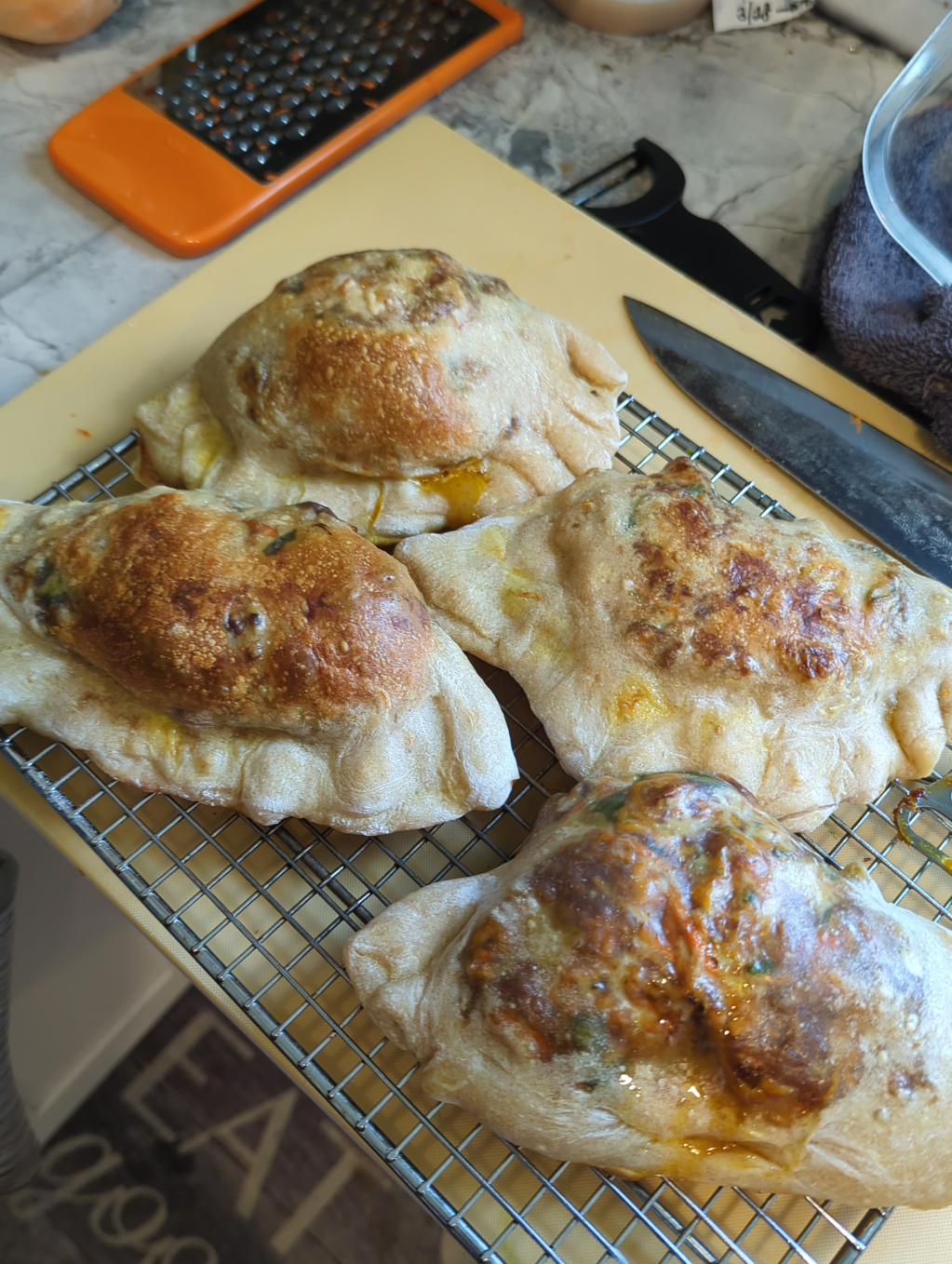
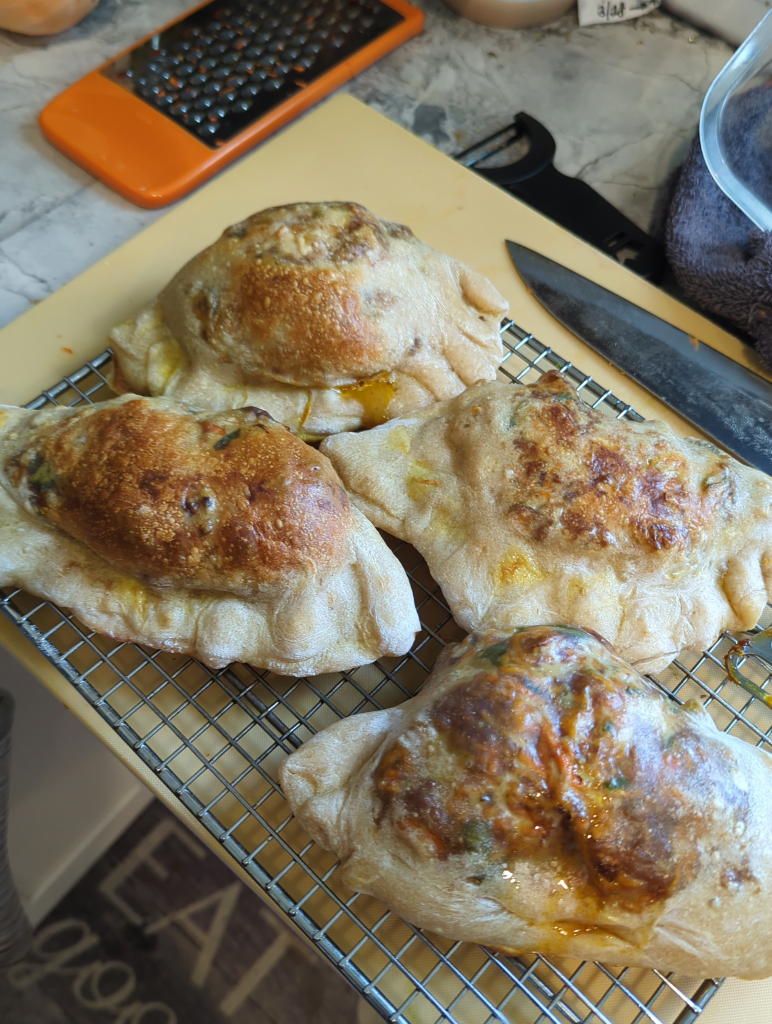
“What if beef stew were portable?”
Goal
Take my beloved beef stew meal prep and integrate what I have learned about pizza dough to create a calzone/hand pie.
The bread had to be soft, reheatable, refrigerator tolerant.
The filling had to be moist but not wet.
Make beef stew, but portable.
Moisture Management
Hand pies live and die by moisture management. Too much and the first bite releases all of your hard work, the shell becomes soggy, sadness all around.
The beef was pressure cooked in chicken stock, picked up beef flavoring and then was reduced to a glace de viande. The shredded beef was then tossed in the glace with a bit of apple cider vinegar for brightness. Just enough coating to leave the beef moist but not dripping.
The second prong of the moisture management pincer was by vegetable participation. Yes, carrots and potatoes are classics in stew, but chunks would release too much water, lead to uneven bites, and create poor structure with air pockets. The vegetables, instead of being cubed, were grated and integrated into the beef mixture like rebar. The sweet potato would soak up excess moisture from the carrots, the beef, and the glace. When it came time to filling and baking the entire mixture held together like a sausage.
Structural Integrity
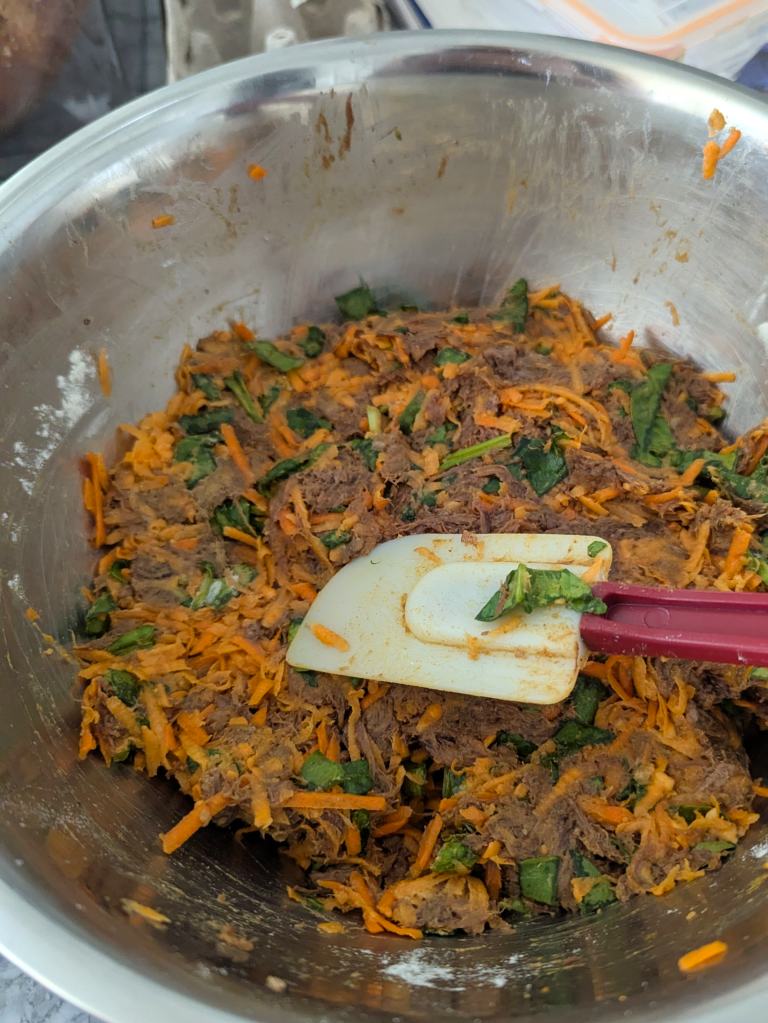
Beef stew, for me, is defined by tender, shredded beef and hearty vegetables with a thick soup.
Grated vegetables here did a lot to hold the shape together during the initial integration, during the bake, and after reheating. The filling holds together remarkably well. Unlike an empanada the filling here is rather cohesive, texture is derived from the vegetable fibers and the tender beef rather than from shape.
With the vegetable fibers holding the meet together and the spinach aiding in this process the end product was a fairly solid mass of filling that is not likely to lose itself after one or even multiple bites.
The Dough
After my most recent pizza success with ’00’ flour I took that information into this week’s meal prep. I increased the hydration a bit, thinking I would need the extensibility to cover the filling.
I estimated about 75g of dough would be necessary for each pie. This was about correct. 100g might be nicer but 75g was sufficient. 100g filling was about the maximum. The dough could be stretched incredibly (it’s 68% hydration so that might be obvious).
Think of the dough more as a skin than a shell. Next time I would make the crimp a bit thinner. Gyoza style pleating was successful, but a little overkill, did leave a nice bit of just plain bread on the edge but maybe a bit too much, would be nice to dip though.
What Worked
Filling – Very good. Cohesive. Kept the spirit of beef stew.
Dough – Perfectly skinned the filling, chewy rather than crispy. Maintained the spirit of stew with a nice soft roll to soak up the soup.
Moisture management – Well handled. No leaks during baking. No drips during eating. Survives the refrigerator and microwave very well.
Improvements
Filling – Could have been just a bit more saucy. Slightly looser reduction would be good, I think, as a more visible lacquer rather than an integrated “glue”.
Dough – Smaller crimp. Would like to learn how to do this better.


Leave a comment